
Something Sacred Is Present Here
On divine light, consumer desire, and the paintings of Samah Rafiq

In Raphael’s Transfiguration, completed in 1520, light is a theological language. The presence of the sacred is announces through a technical mastery of depicting light. Shine is a vocabulary through which the spiritual is made legible: a way to say something holy is present.
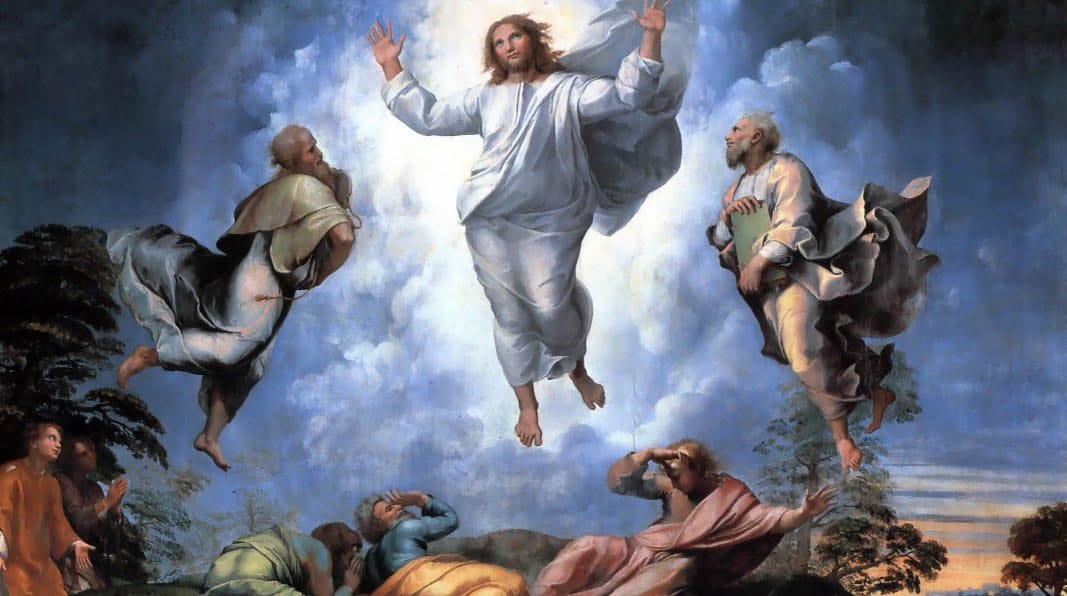
Samah Rafiq’s practice explores what has happened to that use of shine.
Her practice turns on a contradiction that sits at the centre of contemporary visual culture: the same luminosity that once signified divine presence now is used to sells things. The halo has become the highlight. The radiance that Renaissance painters reserved for moments of sacred revelation migrated, over several centuries, into the language of advertising, cinema and mass media, carrying its original charge with it. We still respond to shine as if it means something. The question Samah’s paintings ask, is whether we know what we are actually responding to.
Jacques Lacan’s reformulation of Saussure’s sign gives us a way into this. Where Saussure proposed a relatively stable relationship between signifier and signified, Lacan argued that the signifier is always sliding over the signified, that meaning is always deferred. The shine, in this reading, is a signifier that has detached from one signified, the divine, and been captured by another, the desirable commodity, while carrying its original resonance forward. This is why the advertisement works the way it does. It borrows the visual grammar of transcendence and applies it to something purchasable. The consumer responds to both registers simultaneously, the promise of the product and the echo of something older and less nameable underneath it.
Roland Barthes, in Mythologies (1957), describes precisely this mechanism. In a second-order semiotic system, a sign carries an ideology rather than its literal meaning. The original signified is hollowed out and replaced. The form remains, emptied of its history, available to be filled with new content. Myth, for Barthes, works by presenting this substitution as natural, by making the ideological appear inevitable. The shine of the advertisement presents itself as simply the property of the object, as if luminosity were inherent to the thing and a constructed argument about its value simultaneously. What Barthes makes visible is the labour of that construction, the work required to make a cultural decision look like a fact of nature.
Samah’s work, presented this month at Future Fair in New York, addresses this contradiction. Close-up paintings of cocktail glasses, clinking, distorted, catching light. They are immediately seductive through the hue of the glass, the refracted shimmer of liquid, the particular pressure of crystal against crystal. They have the luminosity of devotional painting and the immediate visual register of a luxury advertisement, and Samah holds the tension between the two open. This is the argument: that these two registers are continuous rather than separate, that the desire produced by the advertisement and the awe produced by the altarpiece draw on the same reservoir of human response. The signifier has changed hands, but the charge it carries has not.
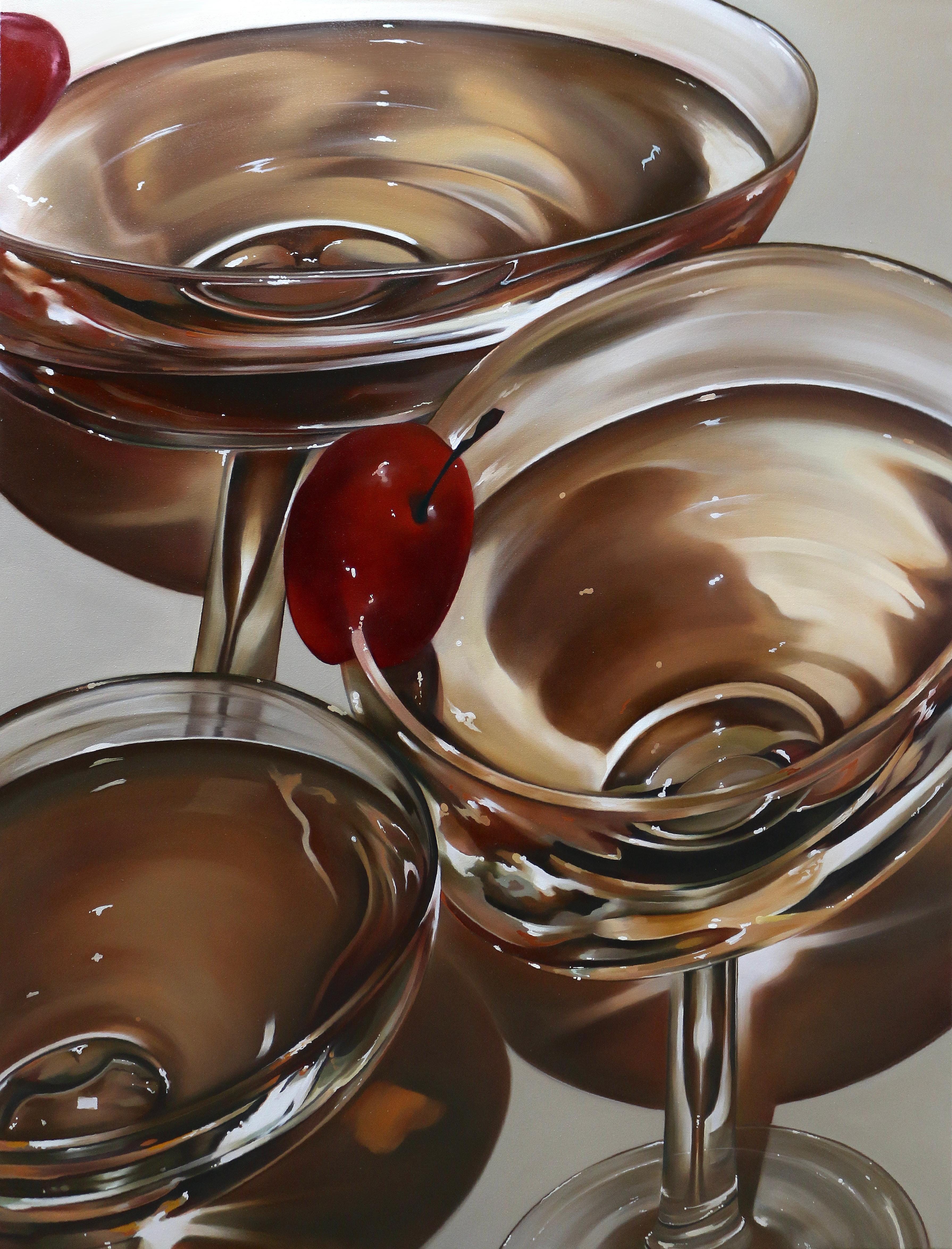
For Samah, as a Muslim woman, alcohol is a charged material. It sits at the intersection of the sacred and the profane in ways that are personal, cultural and theological simultaneously. The cocktail glass is, in Barthesian terms, a myth twice over: once in its religious register, where it carries the meaning of transgression, and once in its consumer register, where it carries the meaning of pleasure, sophistication, arrival. What Samah’s canvases do is hold both mythologies in the frame at once, asking the viewer to receive them together. The Lacanian slip between signifier and signified is made visible: the same shining object means something irreconcilably different depending on which system of belief is reading it, and the painting insists that both readings are happening, simultaneously, in the same eye.
The colour blue runs through her work as a form of inherited memory. She comes to it through her Afghan and Peshwari heritage, a colour dense with centuries of accumulated meaning. In those traditions it is a colour that belongs to the sacred. It also however represents Lapis Lazuli, a special stone often passed down in families and terribly pillaged during the wars in those regions. In her paintings blue is present in the glass, in the refracted liquid, in the shadows between. It is omnipresent whether as a dominant colour or underneath an image that appears, to be about something else entirely. This is characteristic of how Samah works: the deepest argument is in what the surface was trained, over a very long time, to make you feel.
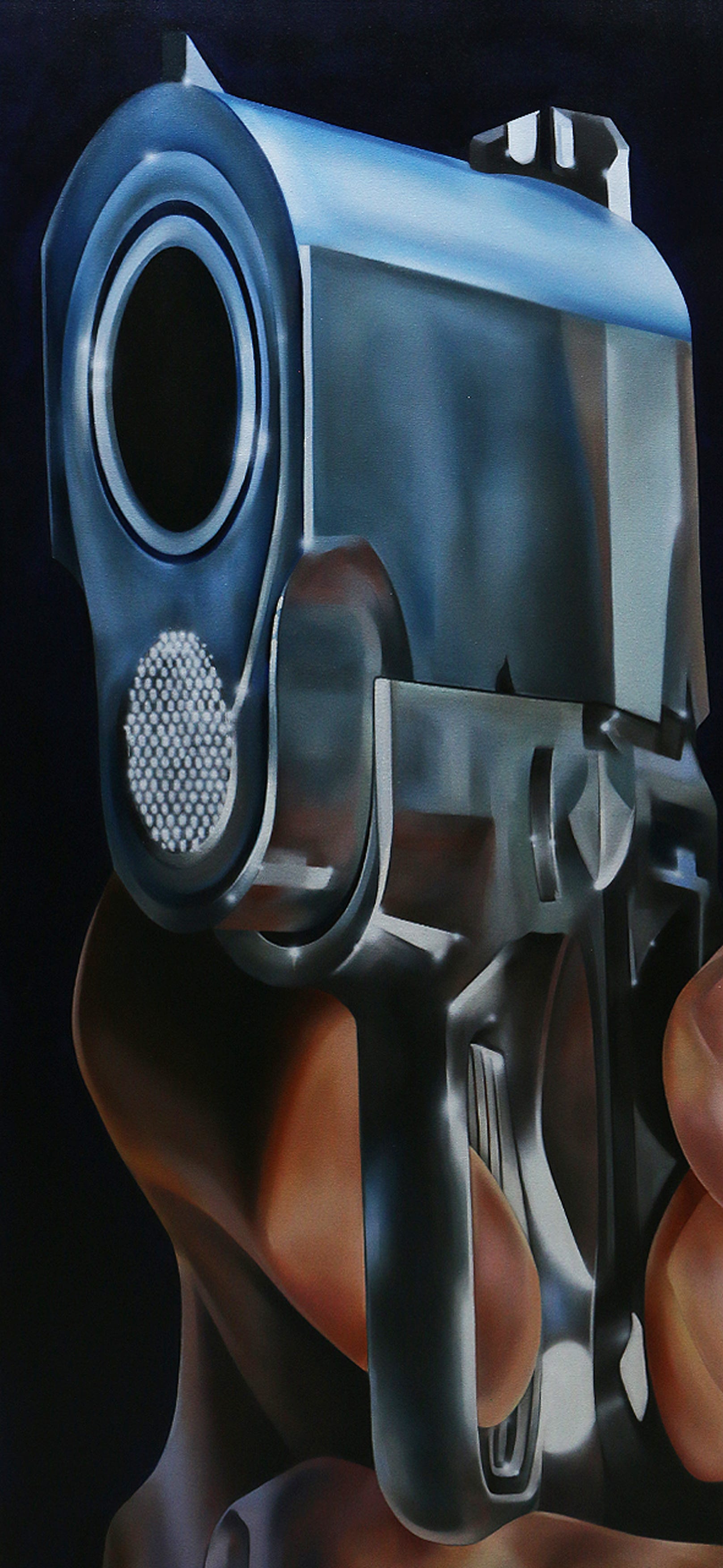
Samah’s practice uses a visual convention evacuated of its original content and repurposed in the service of a new mythology. She creates a visual example of Lacan’s philosophical research into the signifier sliding, while carrying the ghost of what it once pointed toward. Samah’s paintings sit at exactly that point of instability, in the gap between what the shine was and what it has been made to mean.
Her paintings emanate light. They are asking what it means that they glow, who taught us to respond to that light as we do, and what exactly we believe we are in the presence of when we do.