
Why the Traditional Gallery Model Is Failing
How capital, hierarchy, and engineered scarcity are reshaping the contemporary art market

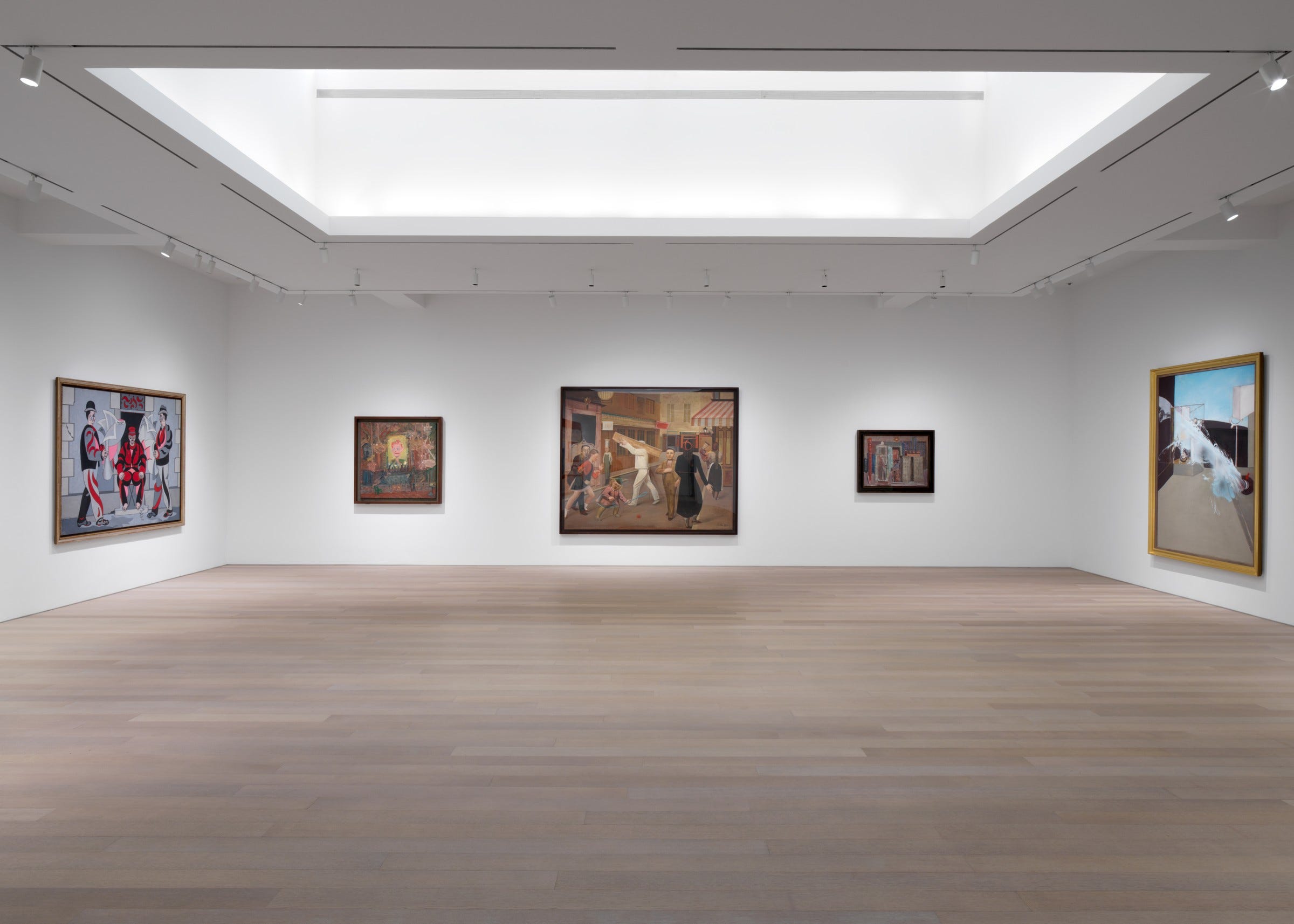
The traditional gallery model is not collapsing in a dramatic implosion. It is eroding quietly, structurally, and perhaps irreversibly.
For decades, the commercial gallery system operated on a relatively stable equation: represent a roster of artists, stage exhibitions in a fixed physical space, cultivate collectors through relationships, and take a 50% commission on sales. Scarcity, gatekeeping, and geography were features, not flaws. Access to artists was controlled. Access to buyers was curated. Information flowed asymmetrically, and galleries sat at the center.
This model appeared organic. It presented itself as a market.
But embedded within it is a structural reality rarely acknowledged: many galleries were never purely market-driven businesses to begin with.
A significant number of galleries are founded by individuals with pre-existing wealth, family collections, inherited capital, or independent financial backing. This means they can afford to operate without immediate sales pressure. They can hold works for years. They already own high-value artworks, ready for resale. They can decline offers. They can manufacture scarcity. They can wait.
When a gallery can sit on inventory indefinitely, the market ceases to function as a normal supply-and-demand system. Prices are not discovered organically; they are staged. Momentum is constructed through selective placements, strategic museum donations, tightly controlled releases, and carefully paced production. A painting is not sold because it must be, it is sold when it serves the narrative.
The result is a managed market masquerading as a free one.
Scarcity is not always the result of overwhelming demand; sometimes it is the product of withheld supply. The ability to hold inventory transforms art from a commodity into a financial instrument. Galleries with deep reserves can weather slow years, prop up artists through downturns, and strategically ration access. Those without capital cannot. They must sell to survive.
This asymmetry distorts the ecosystem.
Smaller or first-generation gallerists, those without inherited wealth or private cushions, operate under entirely different constraints. They face rent, payroll, art fair fees, shipping, fabrication, and marketing costs in real time. They cannot “wait out” the market. If a show doesn’t sell, the consequences are immediate.
Meanwhile, the mythology of the gallery system continues to present itself as meritocratic: the best artists rise, the strongest programs endure. But when financial endurance is subsidized by external wealth, longevity is not always proof of quality, it is proof of liquidity.
And this dynamic is not new.
The arts have always depended on concentrated wealth. Court painters flourished under monarchies. Renaissance workshops depended on powerful banking families. Royal patronage shaped artistic production for centuries. Cultural output has long been intertwined with political and economic power.
The difference is not that art once relied on patrons and now relies on markets. The difference is that patronage used to be explicit.
Power was visible. Control was visible. The relationship between artist and financier was acknowledged as political and economic.
Today, we speak the language of capitalism. We describe the gallery system as a competitive marketplace driven by supply and demand. But when a small number of capital-heavy actors can defend price floors, underwrite production indefinitely, and control release cycles, we are not witnessing a neutral market.
We are witnessing a modern form of patronage, disguised as capitalism.
And the hierarchy that emerges from this structure is not incidental. It is systemic.
The art world is deeply hierarchical. That is not controversial. What is less discussed is how economically baked-in that hierarchy has become.
When an artist begins to gain traction, this looks like museum interest, sold-out booths, waiting lists forming, a larger gallery does not compete sideways. It looks down one rung. Not sideways. Down.
They scan the mid-tier: an artist whose market risk has been reduced. Whose price ladder has been tested. Whose collectors have been cultivated.
Then comes the pitch:
“We can institutionalize you.”
“We can protect your market.”
“We can guarantee production.”
“We can expand your global reach.”
And often, they can. It is an irresistible offer for the artist, and it leaves the mid-tier gallery without its star and thus often without its primary revenue driver.
For two decades, we have watched this pattern repeat. Young artists build early careers with risk-taking galleries, often first-generation dealers operating without inherited capital. These galleries fund ambitious production, absorb unsold inventory, build collector bases from scratch, and construct the first pricing structures.
They underwrite the uncertainty phase.
Then momentum hits.
The larger gallery enters.
The artist moves.
The early dealer absorbs the sunk cost.
The larger gallery absorbs the asset.
In venture capital, early investors receive equity when a company scales. In music, contracts allocate percentages of future earnings. In fashion, intellectual property protects the originator of a product.
In the gallery system, there is no formalized mechanism for early-stage risk recovery. There is however talent poaching disguised as “career progression.”
The ladder exists, and mobility primarily flows upward.
At the top of this structure, the rise of multi-branch mega-galleries has intensified concentration. Global operations such as Gagosian, David Zwirner, and Hauser & Wirth operate with infrastructures that resemble multinational corporations more than traditional dealerships.
They can advance artists against future sales.
They can buy back work to defend price floors.
They can coordinate primary and secondary markets across continents.
They can absorb underperforming exhibitions within diversified portfolios.
When a mid-tier gallery competes against that machinery, it is not competing on taste, but it is competing on balance sheet strength.
If a show underperforms at a smaller gallery, payroll is affected. Rent is affected. Fair participation is questioned.
If a show underperforms at a global operation, it is absorbed.
The art fair system compounds the pressure. What was once supplemental has become mandatory. Art Basel. Frieze. TEFAF.
Participation signals legitimacy, and absence signals non-participant.
A booth can cost hundreds of thousands once shipping, fabrication, travel, insurance, and staffing are included. Placement determines visibility. Prime positions go to galleries with deep histories, and therefore deeper liquidity.
If you opt out, you fall behind.
If you participate and fail to sell, you hemorrhage cash.
And beneath all of this lies a structural contradiction.
The traditional gallery wants to behave like an agency, discovering talent, managing careers, shaping narrative, but it carries the overhead of a luxury retail operation. Prime real estate. Full-time staff. Exhibition production. Insurance. Shipping. Fair booths. Events.
An agency scales through contracts.
A retailer scales through volume.
A gallery tries to scale through prestige.
This hybrid model functioned when information was asymmetrical and competition was regional. Today, that asymmetry is dissolving.
Artists can sell directly via digital platforms. They can work with advisors. They can collaborate with auction houses. They can build collector databases independently. Collectors can access pricing data instantly. Secondary markets are visible in real time.
When information equalizes, power redistributes.
What is failing is not art. Not collectors. Not even galleries as such.
What is failing is a model built on controlled opacity, capital-protected scarcity, one-directional mobility, and the assumption that artists must trade autonomy for validation.
The erosion we are witnessing is not collapse. It is exposure.
Exposure of capital imbalance.
Exposure of structural extraction.
Exposure of inefficiencies long subsidized by private wealth.
And the signs of strain are no longer abstract.
In recent years, respected galleries across different tiers have announced closures or major restructuring. Marlborough Gallery, once a titan of the post-war art world shuttered after decades of influence. Clearing, known for its international program and cross-continental presence, announced its closure. Stephen Friedman Gallery, a cornerstone of the London scene for nearly three decades, revealed it would close its physical space.
These are not marginal operations. They are established, respected, culturally significant galleries.
Their closures are not isolated events. They are signs of structural strain in a system whose economic assumptions are no longer holding.
But this is not a narrative of doom, it is a narrative of adaptation.
Some galleries are choosing to close physical spaces in order to operate more fluidly. Others are restructuring into advisory models. Some are reducing fair participation. Some are embracing collaborative formats. Some are becoming leaner, more project-based, more strategic.
The erosion of one model does not signal the end of galleries. It signals the end of a particular configuration of them.
Every cultural system eventually recalibrates when its cost base and power distribution become misaligned. The current moment is less about collapse than about compression, and compression forces redesign.
The question is not whether galleries survive. They will.
The question is which ones are able to evolve beyond prestige architecture and into agile cultural infrastructure, less dependent on artificial scarcity, less reliant on capital insulation, more aligned with how artists and collectors actually operate today.
The closures we are witnessing are stress tests.
And pressure, in markets as in materials, reveals structural truth.
The traditional gallery model is not ending in spectacle.
It is transforming, unevenly, uncomfortably, but inevitably.
The ladder may remain, but it will no longer define the only path forward.
Subscribed. Love what I see so far
Would u please sub back? I am new here!!
https://substack.com/@bochablue25
!